Wood is still the most common backyard fence in Salisbury, and for good reason. It costs less than vinyl or aluminum, it can be stained or painted to suit almost any house, and a well-built wood fence looks right next to both a new home and a century-old one.
The catch is that wood is only as good as how it is built. Most wood fences that fail early fail at the posts.
Wood fence styles
- Privacy fence. Solid pickets, usually 6 feet tall, for backyards, patios and pools.
- Shadowbox. Pickets alternate on each side of the rails. It looks finished from both sides and lets some air through, which helps in summer.
- Board-on-board. Overlapping pickets with no gaps, even as the wood shrinks. A good choice when full privacy matters.
- Dog-ear, flat-top or capped. Small details at the top that change the look a lot. A cap and trim board gives a more finished, traditional appearance.
- Split rail and simple board fences. Lower, open fences for marking a line or framing a yard.
For front yards and decorative fences, see the picket fences page.
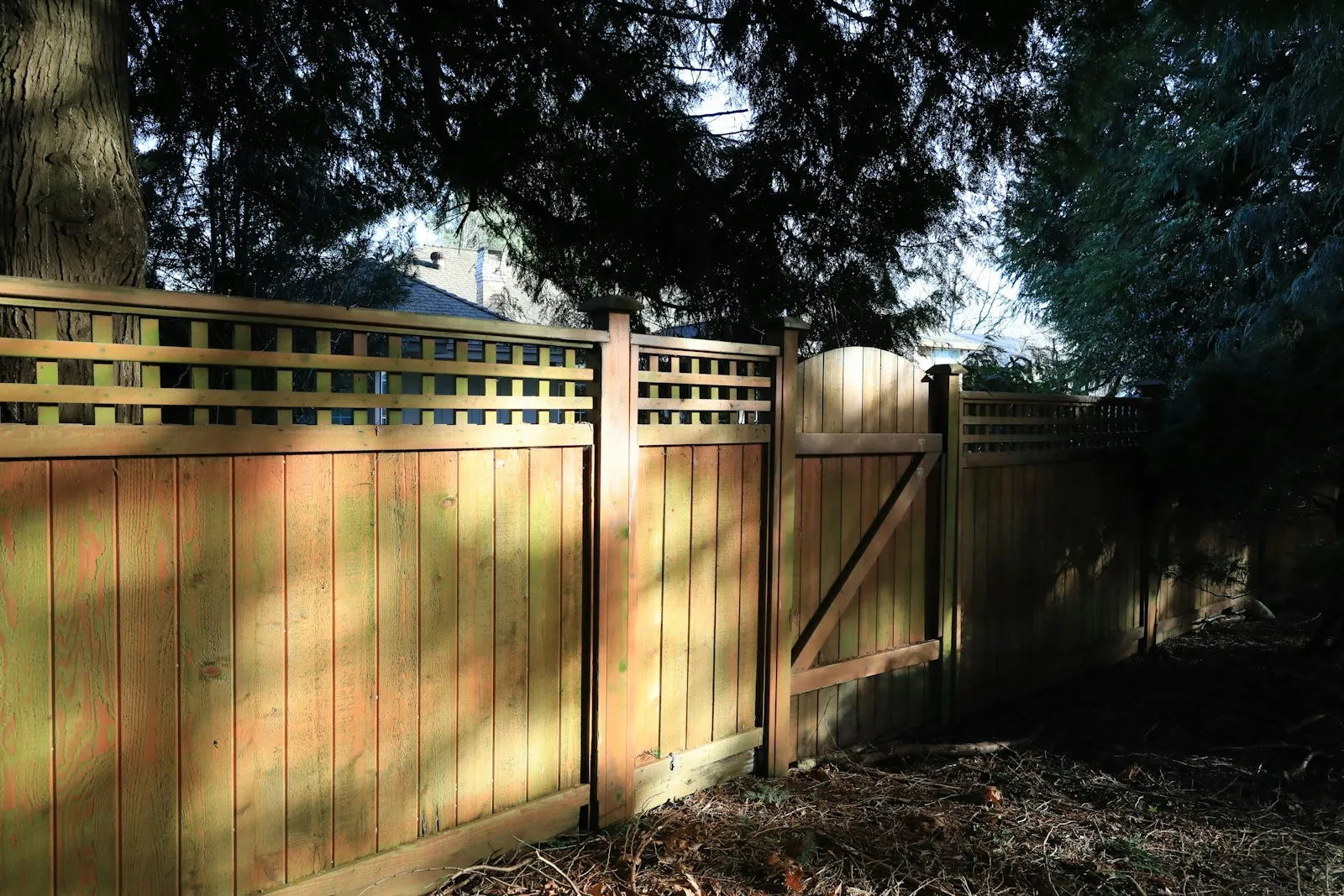
Wood fence installation in Salisbury: how it gets built
Here is what goes into a wood fence that lasts in Rowan County:
- Line and layout. You confirm the property line, ideally from a survey. The crew marks post locations and gate openings, and NC811 marks underground utilities before any digging.
- Posts. A good builder uses pressure-treated posts rated for ground contact, set deep enough for the fence height and the clay. Gate posts get extra attention because they carry the most load.
- Drainage at the base. Red clay holds water. Gravel at the bottom of the hole and concrete shaped to shed water away from the post help keep rot from starting where it usually does.
- Rails and pickets. Rails are fastened with exterior-rated fasteners, and pickets are spaced and leveled to follow your yard, either stepped or following the slope.
- Gates. Gates get a proper frame, solid hinges and a latch that works from the side you need.
- Clean-up and walk-through. The crew hauls off debris and walks the fence with you before calling it done.
A typical backyard wood fence takes one to three days to install.
Lumber choices
Pressure-treated pine is the standard here. It is affordable and holds up well when built correctly. Cedar costs more, resists rot naturally and weathers to a soft gray if left alone. The contractor can walk you through the tradeoffs during the estimate.
What wood fences cost in Salisbury
Wood is usually the most affordable way to get real privacy. Footage, height, style, lumber choice, slope and the number of gates move the number. Gates are priced separately depending on width and build. We don't publish prices because every yard is different. The real price comes from a free on-site visit and a written quote. More detail is on our fence prices page.
Taking care of a wood fence
Our humid summers are hard on bare wood. A few habits go a long way:
- Let new pressure-treated wood dry out for a few months, then apply a penetrating stain or sealer.
- Reapply every few years, or when water stops beading on the surface.
- Keep mulch, soil and sprinkler spray off the bottom of pickets and posts.
- Fix a loose rail or leaning post early, before it pulls on the posts next to it.
Signs it's time to replace a wood fence
- Several posts are leaning or loose at ground level.
- Wood at the base of posts is soft when you press a screwdriver into it.
- Pickets are splitting or falling off faster than you can replace them.
- Gates no longer close even after the hinges are adjusted.
If it is just a section or two, fence repair may be the better move. If you want to get out of the maintenance cycle altogether, take a look at vinyl fences.
Older homes and historic districts
A stained or painted wood fence is often the most natural fit behind an older Salisbury house. If your home is in a local historic district, check with the city before changing or adding a fence, since it may need review first.
Questions people ask
How long does a wood fence last in Salisbury?
A well-built pressure-treated pine fence commonly lasts many years, and how long depends mostly on how the posts were set and how the wood is maintained. Posts that sit in wet clay without drainage are usually the first thing to go. Staining or sealing every few years keeps pickets from cracking and graying out early.
Should I stain my new wood fence right away?
Usually not. New pressure-treated lumber is wet from treatment and needs time to dry out, often a few months. A simple test is to sprinkle water on it. If the water soaks in, it is ready for stain.
Which side of the fence faces my neighbor?
Traditionally the finished side faces out, toward the neighbor or the street. Shadowbox and board-on-board styles look good from both sides, which avoids the question. Some neighborhoods have their own rules, so check if you have an HOA.
Can you build a wood fence on a slope?
Yes. The fence can be stepped down in level sections or raked so it follows the ground. Stepping leaves small triangle gaps at the bottom, raking keeps the bottom close to grade. The installer can show you both on your yard during the estimate.