People notice a gate before they notice the fence. It's the part you touch every day, and it tells you right away whether the fence was built with care. A front gate that drags on the walk, or a pasture gate that has to be lifted and dragged open, wears on you every single time.
Gates around Salisbury cover a wide range: front walk gates on older homes near downtown, backyard gates for the mower, driveway gates on country lots, and farm gates that swing open for a tractor and hold cattle when shut. This page walks through each one.
Front walk gates on older homes
On a house with some age to it, the front gate is a design decision. It should line up with the front walk and the door, sit at the same height as the fence, and use hardware that suits the house.
What tends to look right:
- A wood picket gate that matches the picket fence, with the same picket style and spacing
- Square gate posts a little heavier than the line posts, often with caps
- Simple, sturdy hinges and a thumb latch or gravity latch in black or a matching finish
- An arbor over the gate on some cottage and bungalow styles
A gate should swing in toward the house, clear the walk with a small even gap, and close on its own weight or a spring if you want it to. If your house is in one of Salisbury's local historic districts, check with the city before you change a front fence or gate, since review may apply.
Backyard and side gates
This is the working gate. It needs to fit what goes through it.
- Measure for the mower. A riding mower or a wide wheelbarrow needs more than a standard walk gate. A wider single gate or a double gate solves it.
- Think about the trash cans. If they roll through the gate once a week, put the gate where the path is short and level.
- Latch it for the dog. A self-closing hinge and a latch that catches on its own keep a gate from being left open. If you have a pool, the rules for pool gates are stricter, so check what applies.
- Lock it if you need to. A latch that takes a padlock keeps the side yard closed.
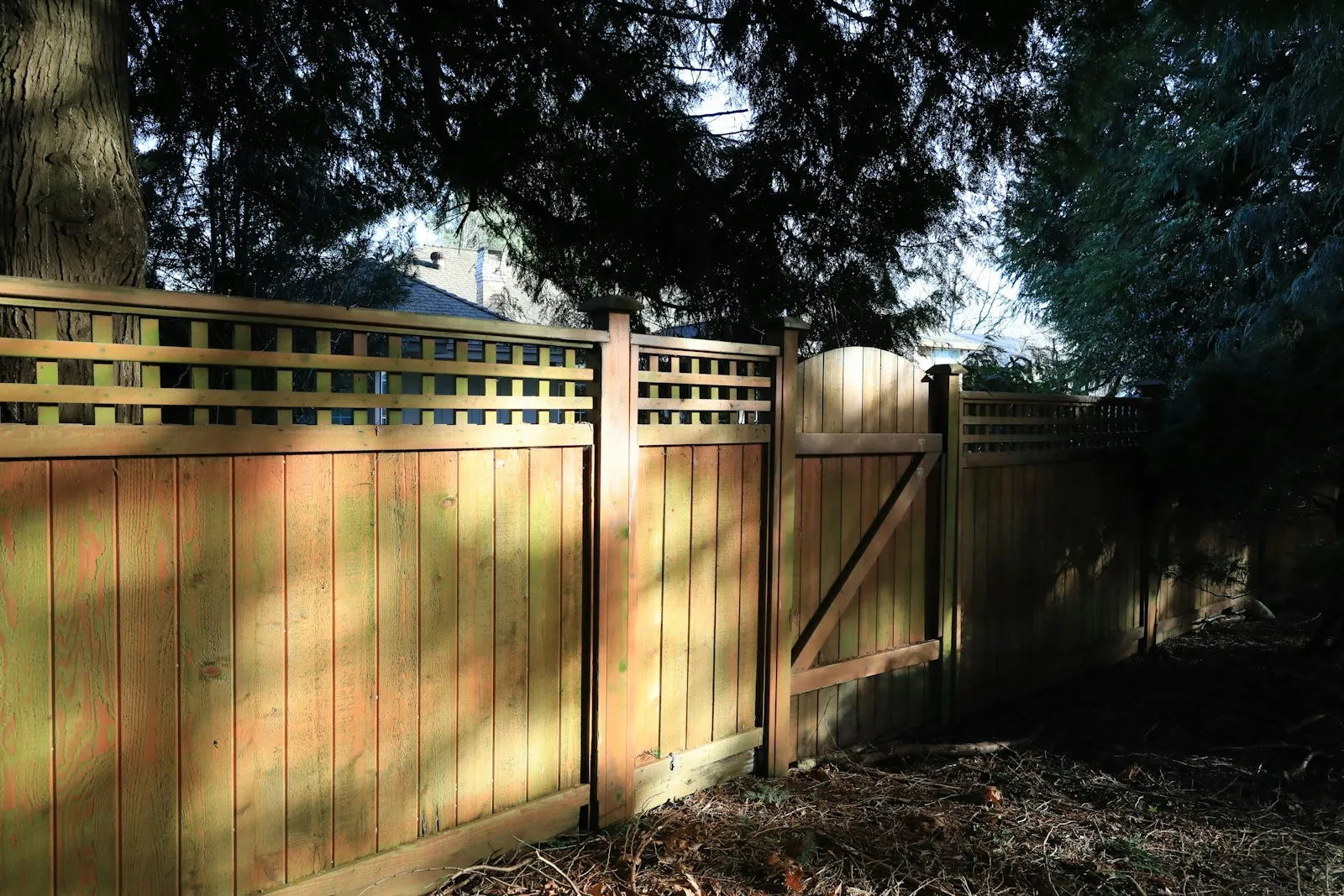
Most backyard gates in Salisbury match a wood fence, vinyl or chain link. A wood gate this size needs a diagonal brace running the right direction, from the bottom hinge side up to the top latch side, or it will sag.
Driveway gates
Driveway gates show up on country lots, larger in-town properties and anywhere someone wants to keep a dog or livestock in while still driving through.
The first choice is swing or slide. A swing gate is simpler but needs clear room to open, and on a sloped drive it may hit the ground halfway. A slide gate rolls sideways along the fence and works where the drive climbs or where there's no room to swing. Double swing gates that meet in the middle keep each leaf shorter and lighter.
Automatic openers can run off a line from the house or a solar panel. Ask how the opener stops and reverses if something is in the way, and how to open the gate without power.
Farm gates in Rowan County
Out past the city, gates are part of how the land works. A gate in the wrong place, or too narrow, becomes a problem every time equipment moves.
Things to settle before a farm gate goes in:
- Width. Measure the widest thing that will pass through, a tractor with an implement, a hay wagon, a stock trailer. Then add room for turning.
- Location. Put gates where animals and equipment naturally move. Corner gates make it easier to work animals along the fence.
- Gate type. Steel tube gates are common, light and long-lasting. Wood gates match board fence. Wire-filled or mesh gates help hold smaller animals.
- Posts and bracing. A long farm gate hanging on one post pulls hard. That post should be heavy, set deep, and braced back to the fence line so it doesn't lean into the opening.
- Swing direction and slope. On rolling ground, a gate may only swing one way without hitting the hill. Plan for that.
The farm fencing page covers board fence, field fence and the fence lines these gates hang in.
Why gates sag, and how good ones don't
Almost every gate that sags is sagging for one of three reasons: the post moved, the hinges stretched, or the frame racked out of square. In Rowan County red clay, which holds water and moves as it wets and dries, a gate post that wasn't set deep enough is the most common cause.
A gate built to last has a heavier post than the fence around it, set deep in concrete or properly tamped and braced on farm lines. It hangs on hinges rated for its weight, and the frame is braced so it can't twist. If a gate you already have is dragging, that's a job for fence repair.
What a gate costs
Gates are priced separately from the fence. Width, material, the size of the posts, hardware and any automation set the number. A single picket gate is a small job. A wide double drive gate with an opener is a big one. The fence prices page explains how gates fit into a written quote. Gates can be added to an existing fence or built with a new one, in Salisbury and nearby Spencer, Granite Quarry, Rockwell and Faith.
Questions people ask
Can a gate be added to a fence I already have?
Usually, yes. The contractor cuts in an opening, sets new heavier gate posts and hangs the gate. The existing fence needs to be in decent shape for the new gate to hang well.
How wide should a farm gate be?
Wide enough for your largest equipment plus room to turn in. Measure the tractor with its widest implement and your trailer before deciding. Going a little wider than you think you need is rarely a mistake.
Which way should my front gate swing?
Most front gates swing in toward the house, away from the sidewalk. The contractor will look at the walk, the slope and where people stand when opening it before hanging the gate.
Do I need approval to change the gate on an older home?
If the house is in a local historic district, a new or changed front fence or gate may need city review. Check with the city first. If you have an HOA, check the covenants too.