Commercial property in Salisbury runs from brick storefronts downtown to equipment yards out along I-85 and farm supply lots on the county roads. A fence for one of those has almost nothing in common with a fence for another. A good commercial fence starts by sorting out three things: what you're keeping in or out, who needs to get through, and who will be looking at it.
This page covers commercial and community fence work in Salisbury and around Rowan County, handled by an independent local fence company that walks the site before quoting anything.
Start with the job, not the material
Before anyone talks about chain link or aluminum, it helps to answer a few plain questions:
- Is this about security, screening, safety or looks? A storage yard needs to stop people. A loading dock behind a shopping center mostly needs to be hidden. A pool needs a barrier that meets the rules. A front entrance needs to look good.
- What happens after hours? If the lot is empty overnight, height, climb resistance and locking gates matter more.
- How much traffic goes through? Trucks, tenants, customers and staff all need a way in. Gates often drive the design.
- Who has to approve it? Owners, boards, management companies and sometimes the city.
The answers usually point to the right fence on their own.
Industrial yards and storage lots
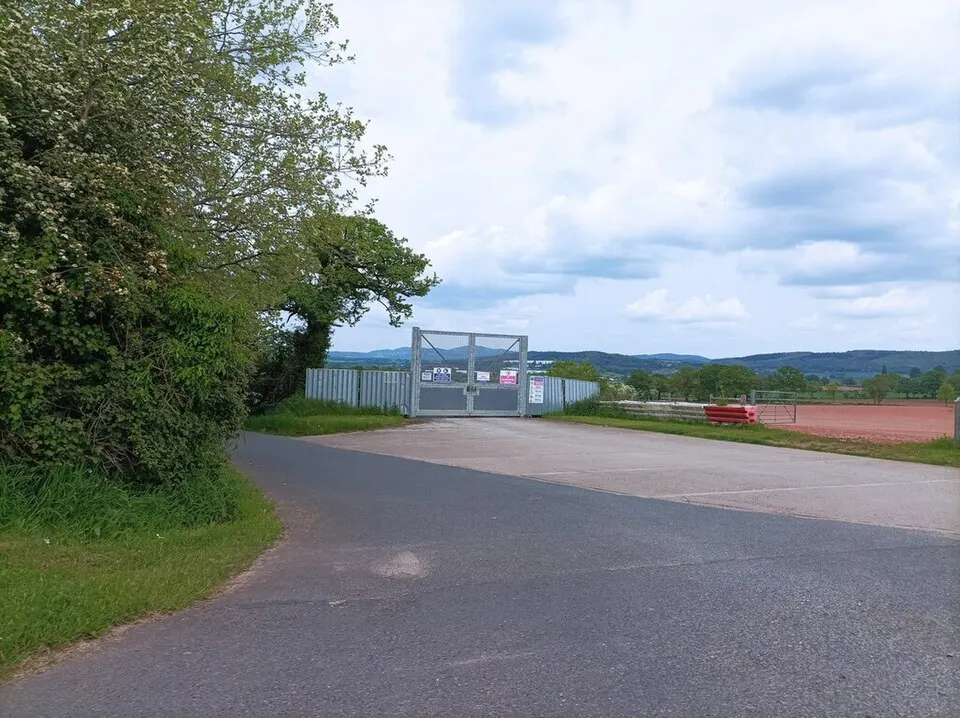
For equipment yards, contractor shops, warehouses and storage lots, heavy chain link is the standard. It covers long runs at a reasonable cost, it's hard to climb at commercial heights, and you can see through it to check the lot from the road. It's a step up from the residential chain link fences most homeowners buy, with heavier posts, heavier fabric and taller heights.
Common additions:
- Privacy slats to keep what's inside out of view
- Security tops such as barbed wire, where zoning allows it (check the city or county rules for the address)
- A bottom tension wire or rail so the fabric can't be lifted
- Heavier terminal and gate posts, since long runs and big gates pull hard on them
Rowan County red clay holds water and shifts. On a long commercial run with slats catching wind, post depth and footing matter as much as anything you can see.
Storefronts, offices and older commercial buildings
Downtown and in the older commercial areas, a fence has to fit the building. A raw galvanized fence beside a restored brick building looks wrong. Black ornamental aluminum or steel is the usual answer. It marks a patio, a side lot or a parking edge without blocking the view of the building. Our aluminum and ornamental page covers the styles.
If the property is in one of Salisbury's local historic districts, a new or changed fence may need city review before work starts. Check with the city first. The contractor can talk through styles that tend to suit older buildings.
Apartment communities and HOAs
Communities have their own list: pool barriers, playground fencing, perimeter lines along a road, fencing behind buildings, and the dumpster pad.
- Pool areas. Barrier rules usually cover height, gaps and self-closing, self-latching gates. Requirements vary, so the property should confirm what applies, and the contractor should build to it.
- Perimeter and entrance fencing. Often ornamental at the entrance and something more practical along the back of the property.
- Matching existing work. Many communities want new sections to match what's already there. Bring photos or specs if you have them.
Board approval, management sign-off and any permit come before scheduling. The contractor can provide a written quote and drawing for the board packet.
Dumpster pads and equipment screens
Dumpster enclosures take more abuse than any other fence on a property. Trucks back in tight, gates get slammed, and cheap hinges give up within a year. A sturdy one has steel gate posts set deep, gates wide enough for the truck, drop rods to hold the gates open, and screening that matches the property. The same idea works for screening HVAC units, generators and outdoor storage.
Gates that hold up to traffic
On a commercial fence, the gates wear out first. A walk gate used by fifty people a day needs better hinges and a better latch than a backyard gate. A drive gate that trucks use needs heavier posts and enough width for turning.
Options include swing or slide drive gates, automatic openers with keypads or cards, and keyed walk gates. Fire and emergency access should be part of the plan. The gates page covers swing versus slide and why gates sag.
Getting a price
Commercial pricing depends on footage, height, fabric or panel weight, post size, gate count and type, automation, clearing, and how hard the site is to work around while the business is open. The fence prices page explains what moves the number. A real price comes from a site walk and a written quote for property in Salisbury, Spencer, East Spencer, China Grove or elsewhere in the county.
Questions people ask
Can the work be done while my business stays open?
Usually. Commercial jobs can often be done in sections so entrances and loading areas stay usable. Tell the contractor your hours and busy days at the site walk.
What's the best fence for an equipment yard?
Heavy chain link at a commercial height is the common choice, often with slats for screening and a locking drive gate. If zoning allows, a security top adds another layer. The contractor will look at the site and what you're storing.
Can new fence match what our property already has?
Often, yes. Bring photos, specs or the name of the style if you have them. Matching exact older products isn't always possible, but the contractor can get close or suggest a clean transition.
Who handles permits and approvals?
The contractor typically pulls any permit the job needs. Board, owner or management approval is on the property side. If the site is in a local historic district, check with the city before committing to a design.