A lot of the fences around Salisbury came with the house. Somebody built them years ago, nobody remembers who, and nobody knows how deep the posts went. They did their job for a long time. Now the pickets are gray and soft, the rails sag between posts, and the gate hasn't latched on its own in years.
At some point, patching that fence is just paying to keep an old problem going. Here's how to tell when you've reached that point and what a replacement involves.
Signs a fence is done
Walk the whole line and look at it honestly.
- The posts are going at the base. Wood posts rot right where they meet the ground. If you can push several of them and they move, the rest likely aren't far behind.
- The rails are the problem, not just the boards. Rotten or split rails mean new boards have nothing solid to fasten to.
- It's leaning in long stretches. A whole section tipping one way usually means shallow posts in clay that's been moving for years.
- The repair bills keep coming. If you've paid for fixes in several of the last few years, add them up.
- It no longer fits. Wrong height for the dog, wrong style for the house, or it fences the wrong part of the yard.
If the damage is limited to a gate, a few posts or one storm-hit section, fence repair is likely the better choice. A good contractor will tell you which way they'd go.
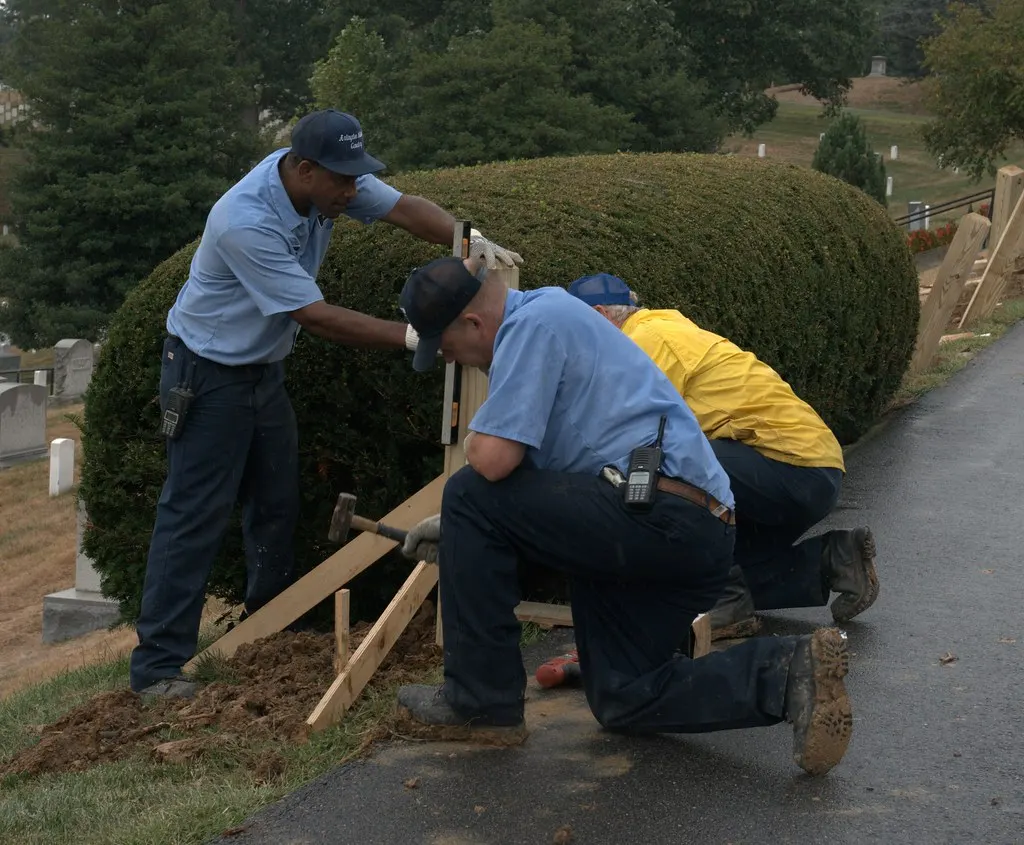
What happens when the old fence comes out
Tear-out is real work, and it should be on your written quote as its own line.
- Boards, panels or wire come off. On wood fences, the crew watches for old nails and rusted hardware.
- Posts get pulled. Posts set in concrete come out with the concrete attached. In dense Rowan County clay that can take time and equipment.
- The holes get handled. Filled, or reused if the new layout calls for it.
- Debris gets hauled off. Confirm this is included. A pile of old fence by the street is not what you're paying for.
If any old fence is shared with a neighbor, or sits on their side, talk to them before anything gets pulled.
Old posts, new fence
It's tempting to save the old posts. It rarely makes sense. Wood posts that have been in clay for years are usually soft below ground even when the tops look sound, and a new fence on old posts will fail when the posts do. New fence products also come in set panel widths that seldom match old post spacing. Expect new posts, set at proper depth with drainage at the base.
Choosing the next fence
The old fence was somebody else's choice. This one is yours. A few things to think about:
Does it suit the house? On an older Salisbury home, a painted wood picket fence or simple black aluminum usually looks like it belongs. A tall plastic-white privacy wall in front of a historic house can look out of place. Behind the house, where privacy matters more, there's more room to choose.
How much upkeep do you want? Wood costs less up front and needs stain or paint every few years in humid summers. Vinyl costs more and needs little beyond a wash.
What does it need to do now? A taller fence for a bigger dog, a wider gate for a riding mower, or a fence that finally closes off the side yard.
What's it going to cost? Material, height, footage, gates and tear-out all move the price. The fence prices page breaks down each one.
Replacing long farm lines
On acreage, replacing a fence is a bigger project. Old field fence and board fence can run for thousands of feet, often with trees grown into the line.
Some owners replace in stages, starting with the road frontage or the pasture that holds animals. Corner and brace posts get set first so the new wire has something solid to pull against. Brush and saplings along the old line may need clearing before the crew can work. The farm fencing page covers the fence types.
Get the line right this time
Old fences in Salisbury are often not on the property line. They follow an old hedge, a previous owner's guess, or a line that made sense fifty years ago. Putting a new fence in the old holes repeats the mistake.
- Find your survey or the recorded plat. On older lots and rural land, a new survey is often worth the cost.
- Look for corner pins.
- Talk to your neighbors before the old fence comes down.
- If the property is in a local historic district and you're changing the style, check with the city for review first.
- If you have an HOA, check the covenants and get approval in writing. The contractor can provide a quote and drawing.
- The contractor pulls any permit the job needs, and NC811 marks utilities before new holes are dug.
Fence replacement is available in Salisbury and nearby China Grove, Granite Quarry, Rockwell and Faith.
Questions people ask
How do I know if my fence should be replaced instead of repaired?
Look at the posts and rails, not just the boards. If many posts are rotted or loose, or the rails are failing, replacement usually makes more sense. If it's a few posts or a gate, repair is often the better buy.
Can I keep my old fence posts?
Usually not. Old wood posts are often rotted below ground even when they look fine on top, and new panels rarely match old spacing. Steel posts from chain link can sometimes be reused if they are straight and sound.
Can a new fence look like it belongs on an older home?
Yes. Traditional wood pickets, simple board fences and black aluminum tend to suit older houses. The contractor will look at the house and the street before suggesting a style.
How long does replacing a fence take?
Most residential replacements take a few days, with tear-out on the first day. Long farm runs take longer. NC811 marking and any approvals come first, so plan for that time too.